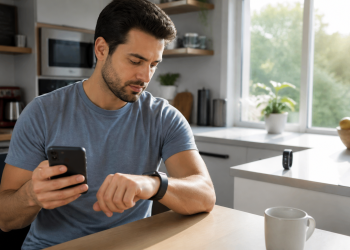
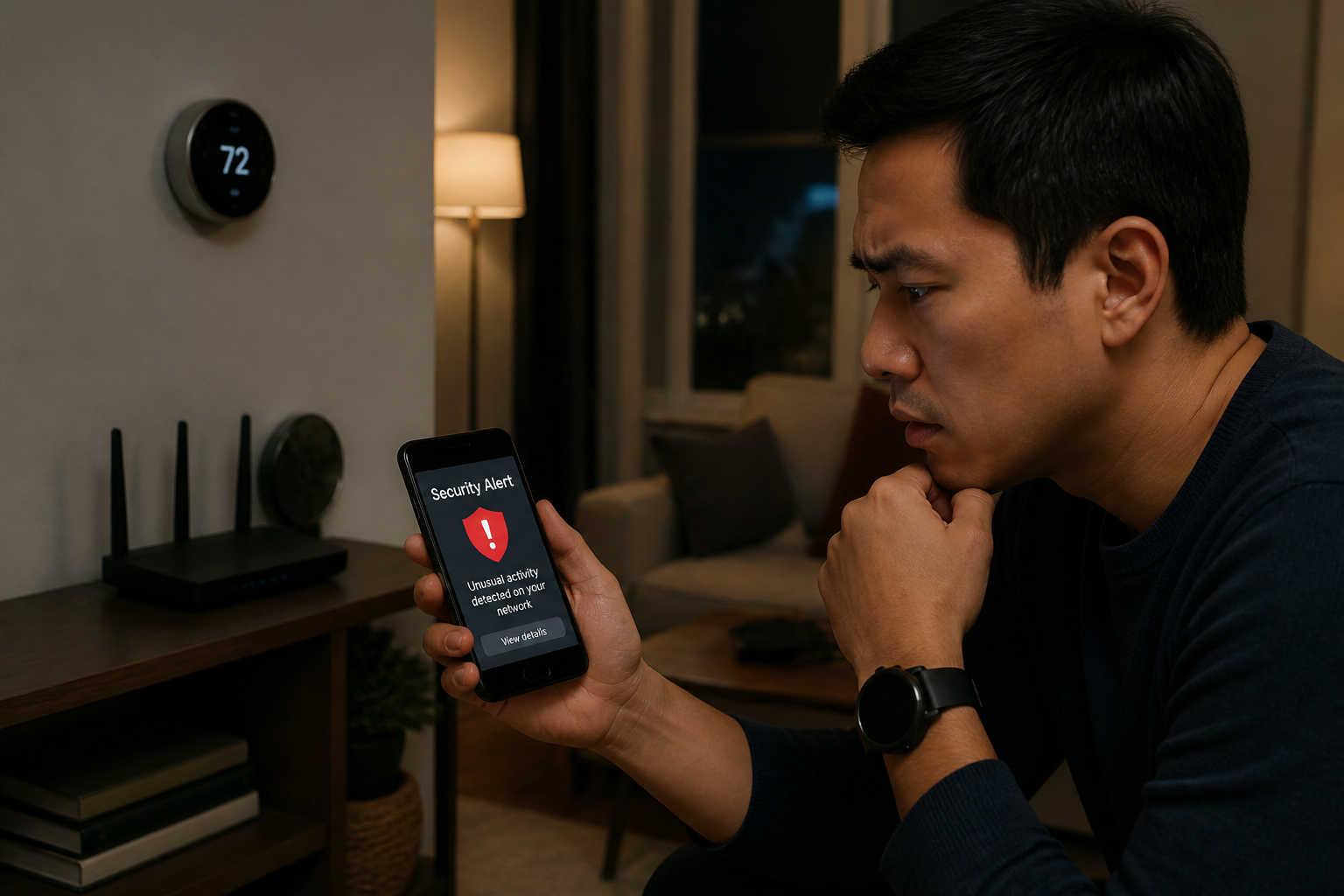
A watch that reads your texts, a thermostat that adjusts the temperature, a scale that sends your weight straight to an app. According to the 2025 digital barometer, these everyday gadgets—now utilized by 40% of French individuals over the age of 12—are designed to make life easier. However, every single sensor, Wi-Fi link, or Bluetooth connection acts as an open doorway. Unlike a traditional computer or smartphone, people rarely think about locking down a smart lightbulb or a video baby monitor. This danger is far from theoretical: a poorly configured device can compromise your personal privacy, expose your health records, or act as a bridge for hackers to infiltrate your entire home network.
Why are connected devices much more vulnerable than standard computers?
A smart appliance (such as a smartwatch, security camera, smart speaker, or thermostat) has a very specific job: to measure, gather, and transmit information. It is not built like a desktop PC equipped with comprehensive firewalls and antivirus software. Many mass-market models ship straight from the factory with weak default settings, including identical passwords across all units from the same brand, basic PIN codes, and unencrypted transmissions. Manufacturers prioritize keeping retail prices low and setup simple over rigorous security.
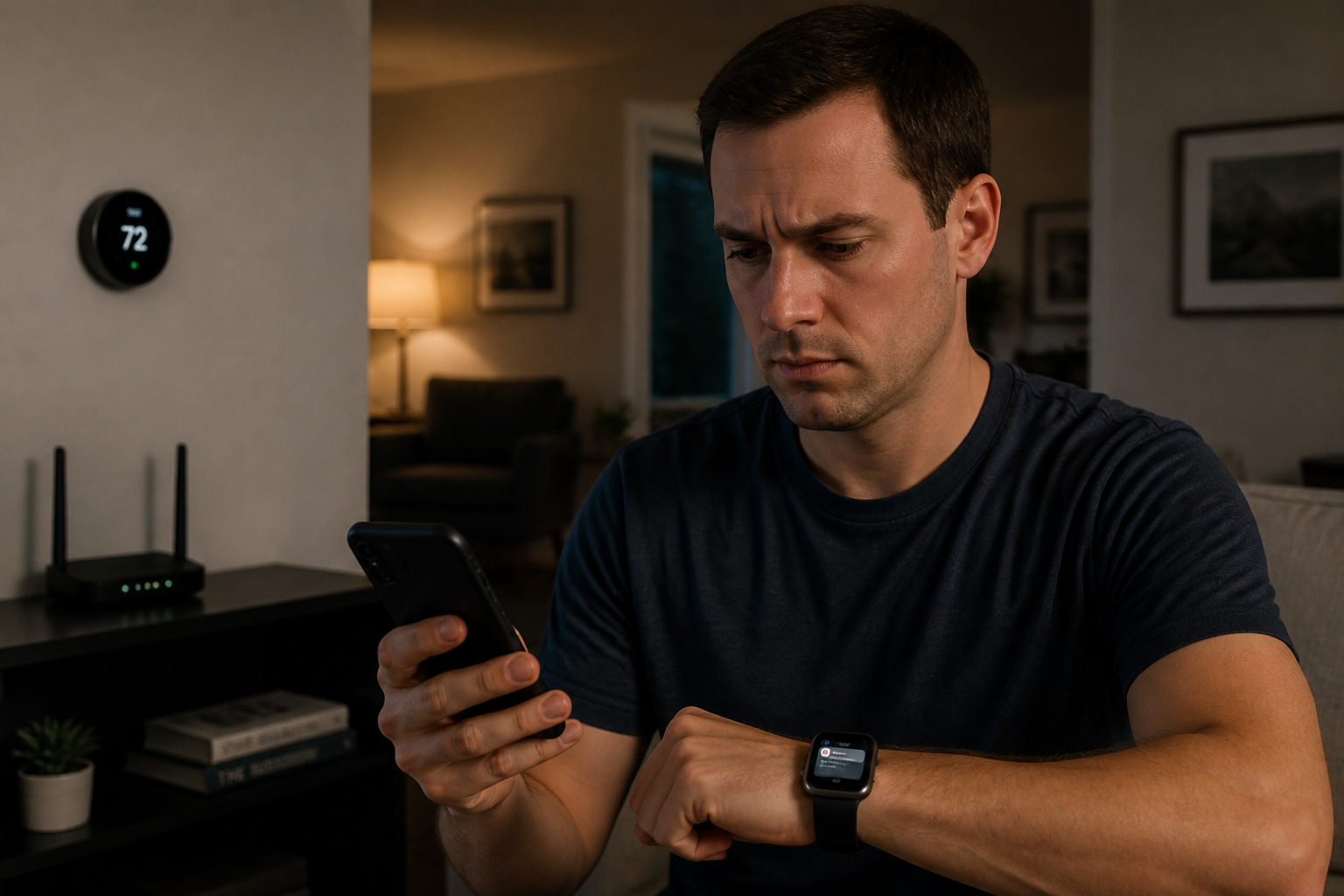
The situation worsens when the gadget links to a mobile phone or tablet that acts as a bridge to the internet. If this intermediary hub remains unlocked (such as a phone screen without a passcode or a poorly protected Wi-Fi network), all the moving data becomes wide open. France’s data protection authority, the CNIL, emphasizes a crucial warning: any connected gadget paired without a required password or a physical confirmation button can easily be discovered and manipulated by anyone within Bluetooth range or on the local network.
Personal data: What you are actually leaking
A smart blood pressure monitor transmits your heart rate. A fitness tracker logs your running routes via GPS. A home security camera records your living room. Stored either on the vendor’s cloud servers or on your mobile device, this trove of information represents pure gold for cybercriminals and advertisers.
The primary threat isn’t always outright theft. Frequently, it involves commercial exploitation carried out without your explicit consent. Terms of service agreements are rarely read, yet they often permit sharing information with third-party partners. Specialized health devices (like smart scales and continuous glucose monitors) handle highly sensitive details. If these leak, the fallout can range from targeted spam to discriminatory insurance practices.
So, what practical steps should you take? Before turning on a new device, check its menus to ensure automatic social media sharing is turned off. On any linked online profile, use a pseudonym instead of your real name. The CNIL even suggests creating a dedicated email address strictly for these services, separate from your personal and family inboxes.
Configuration mistakes that wreck your security
Most security incidents stem from users who leave factory settings untouched. Here are the three most common pitfalls:
- Keeping default passwords: Words like “admin” or “1234” remain the standard codes for numerous thermostats and security cameras—combinations that hackers know by heart.
- Unverified pairing: Certain gadgets, such as smart toys or wireless speakers, link automatically to the first phone that requests a connection. Without a physical button to press to authorize the pairing, anyone can take command.
- Lack of home network isolation: If your internet router lacks a guest network feature, a poorly secured gadget (like a smart lightbulb) can serve as a backdoor straight into your primary computer or network-attached storage drive.
Another subtle mistake involves leaving devices powered on indefinitely. A smart camera or microphone left running while you are home can pick up private conversations. The straightforward remedy is to turn off the gadget when it is not in use, particularly if it includes a built-in mic or lens.
How much does it cost to secure your connected devices?
The good news is that fundamental safety measures cost nothing. Changing a password, disabling automatic sharing, or setting up a guest Wi-Fi network on your router amounts to zero euros. The only real investment required is the time spent configuring each appliance.
For individuals seeking advanced protection, installing a router with a built-in firewall (ranging from €50 to €150) can successfully isolate IoT gadgets from the rest of the network. However, in most instances, following the CNIL’s baseline recommendations is sufficient:
| Action | Cost | Difficulty |
|---|---|---|
| Change the default password | Free | Very easy |
| Disable automatic sharing | Free | Easy |
| Set up a guest Wi-Fi network | Free (modern router) | Moderate |
| Update the firmware | Free | Easy |
| Use a pseudonym for accounts | Free | Very easy |
| Router with network isolation | €50 to €150 | Moderate |
Be warned: software updates do not always happen automatically. Certain products, particularly budget alternatives, never receive them. Before making a purchase, verify that the manufacturer actively releases security patches. Without them, your hardware acts as an open sieve from day one.
When smart tech becomes a risk for your children
Connected baby monitors, GPS-enabled watches for kids, and voice-recording interactive toys are undeniably convenient, yet they raise specific privacy concerns. An unsecured baby monitor can be viewed by unauthorized third parties. A toy that streams voice data to a remote server exposes your child to continuous recording.
The CNIL’s stance is unequivocal: exercise even greater vigilance when the data involves minors. Never post the login credentials for these devices on social media platforms. Turn off microphones and cameras when the items are not actively needed. When buying a child’s smart watch, opt for a model that does not require an online account or that lets you wipe data remotely.
What to keep in mind before buying or installing a smart device
A connected appliance is never a harmless gadget. It functions as a sensor that collects information, stores it on servers often located abroad, and broadcasts it across networks you cannot control. Adopt this core mindset: treat every device as a potential spy unless you configure it properly.
Prior to purchasing, read reviews regarding the manufacturer’s privacy policy. A €20 model that lacks update support and custom passwords is never a bargain. Once installed, dedicate 10 minutes to altering default configurations, establishing a robust and unique password, and ensuring data sharing is switched off. If you cannot access your personal data to delete it entirely, look elsewhere. True luxury today isn’t having a fully automated smart home—it is maintaining total control over what your belongings reveal about you.