
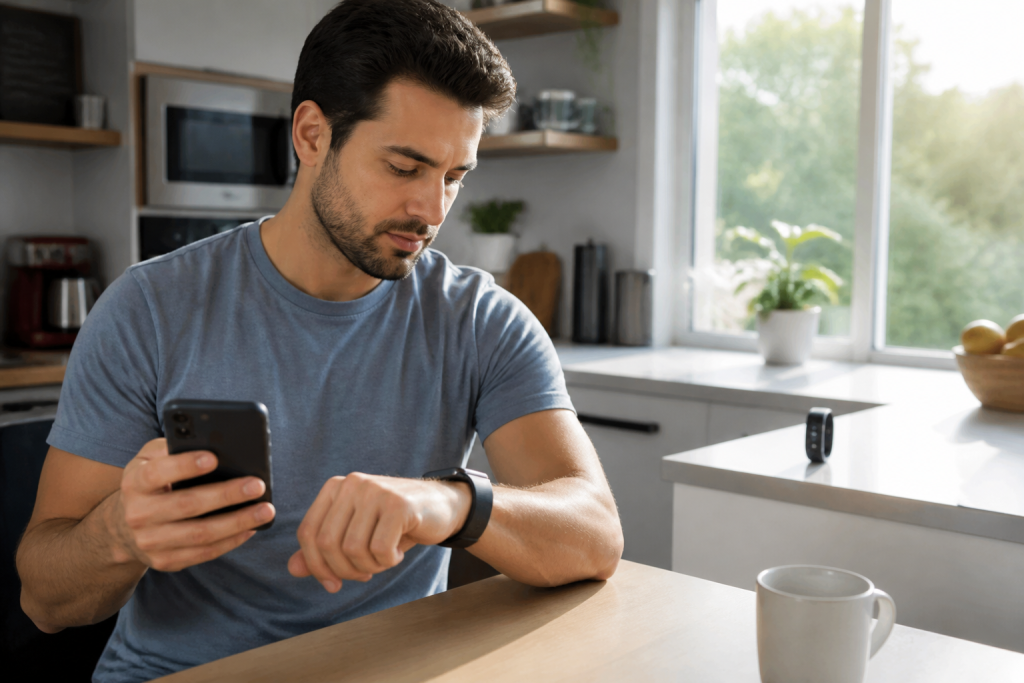
Before diving in, ask yourself a straightforward question: do you need a wearable notification center on your wrist, or a dedicated athletic coach? Your answer dictates everything else that follows, from your financial investment to the software ecosystem. High-end smartwatches can easily eclipse the $300 mark, making it crucial to understand your true requirements first.
Smartwatch vs. Fitness Tracker: Which Device Fits Your Lifestyle?
It is easy to mix up these two distinct categories. A fitness tracker, like a Fitbit or Xiaomi Mi Band, centers entirely around tracking everyday wellness metrics—step counts, pulse rates, and sleep duration. Usually ranging from $50 to $150, they feature minimalist displays and generally cannot handle phone calls or third-party app installations. They represent a smart, economical choice for anyone seeking basic health data without breaking the bank.

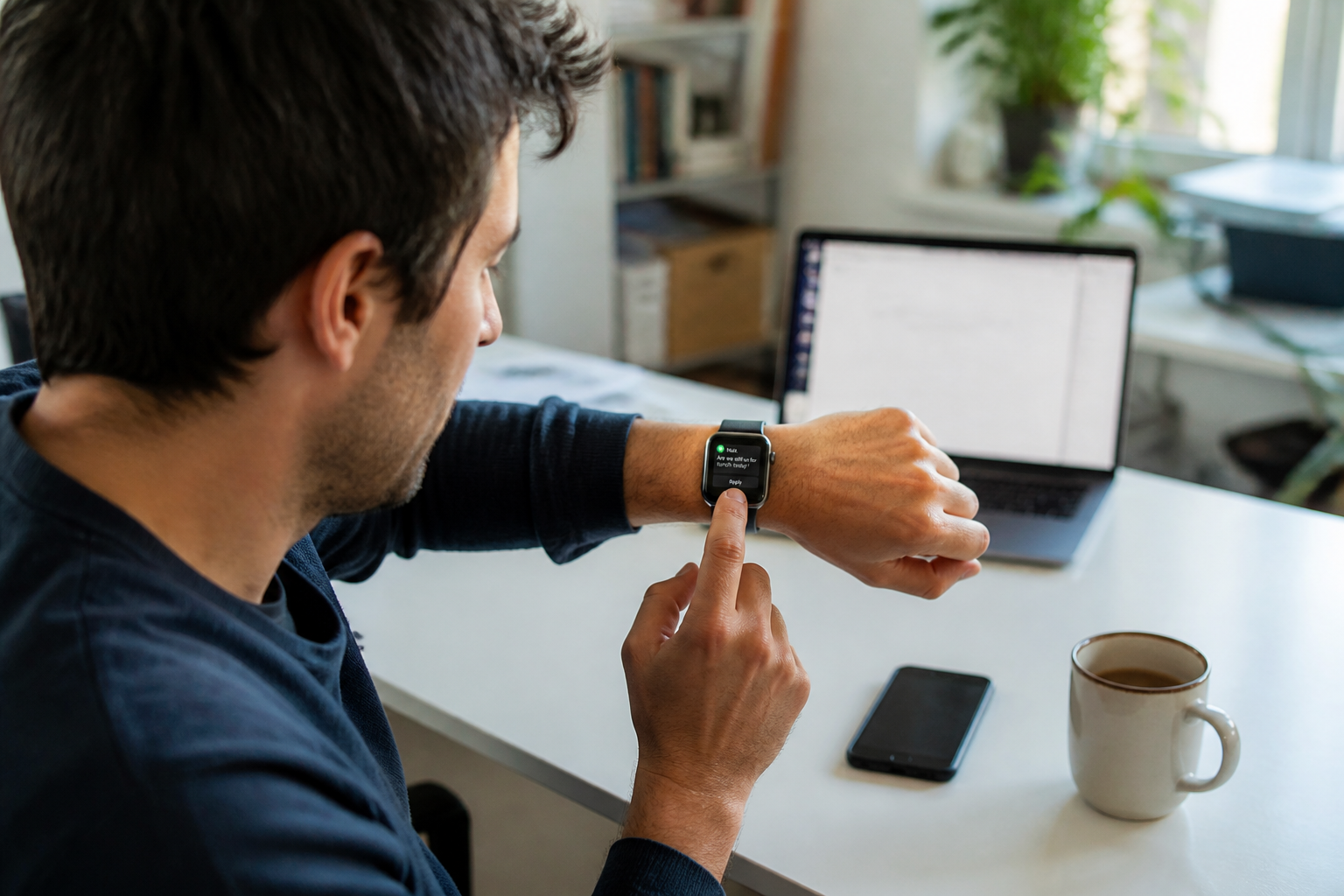
True smartwatches take functionality a huge step further. They mirror text messages, let you take phone calls on the fly, process contactless payments, store boarding passes, and offer turn-by-turn wrist navigation via GPS. Their price tags typically sit between $200 and $1,000. If you constantly pull your phone out for every single notification, a smartwatch will save you significant time. Conversely, if you only jog twice a week and despise being constantly pinged, a basic fitness band will serve you just fine.
| Factor | Fitness Tracker | Smartwatch |
|---|---|---|
| Average Price | $50 to $150 | $200 to $1,000 |
| Alerts & Notifications | Read-only (vibration) | Read, reply, and take calls |
| App Support | No | Yes (payments, audio, maps) |
| Built-in GPS | Usually absent | Usually included |
| Typical Battery Life | 7 to 14 days | 1 to 3 days |
| Primary Focus | Daily wellness tracking | Everyday versatility & fitness |
Compatibility: The Fatal Flaw That Can Ruin Your Purchase
This is trap number one. An Apple Watch works exclusively with an iPhone. There are no workarounds. If your daily driver is an Android device, Apple wearables are completely off the table. On the flip side, current Samsung watches (Galaxy Watch 4 and newer) run on Google’s Wear OS. While they sync nicely with most Android handsets, you still get the smoothest feature integration when paired with a Samsung phone.
Older Samsung models running Tizen OS used to support iPhones, but Samsung fully transitioned to Wear OS back in 2021. Always double-check system requirements prior to checking out. If you plan on switching phone platforms within the next couple of years, pick a cross-platform compatible device: certain Wear OS watches or brands like Garmin Venu play nicely with both Android and iOS.
Battery Endurance and Display Tech: The Trade-Offs to Keep in Mind
Never take marketing spec sheets at face value. An Apple Watch typically lasts anywhere from 18 to 36 hours depending on how heavily you use it, whereas a Garmin or Huawei Watch GT can breeze past 10 days on a single charge. The root cause of this massive discrepancy lies in the display and operating system.
While AMOLED screens look stunning, they drain batteries rapidly. Transflective displays (common on Garmin units) remain perfectly legible under bright sunlight and stretch battery longevity across weeks. If you plan on multi-day backpacking trips far from wall outlets, target a watch boasting over a week of juice. For city life, daily or alternate-day charging is usually a minor inconvenience.
- Short Battery Life (1 to 3 days) : Apple Watch, Samsung Galaxy Watch, Pixel Watch. Ideal if you habitually charge your gear every night.
- Long Battery Life (7 to 14 days) : Garmin, Huawei Watch GT, Amazfit. Perfect for travel enthusiasts and outdoor adventurers.
- Ultra-Long Battery Life (20+ days) : Basic LCD screen models, though they sacrifice advanced smart features.
GPS and Sensors: What Truly Matters for Athletics
If running, swimming, or cycling forms a core part of your routine, built-in GPS is non-negotiable. Without it, the watch relies on your phone’s location services, chewing through your handset’s battery while offering compromised accuracy. A dependable GPS tracks your exact pace, distance, elevation changes, and lets you follow routes without getting turned around.
Optical heart rate monitors are standard across the board now, though accuracy varies by manufacturer. For serious athletic analysis (VO2 max, recovery metrics, training load), look toward specialized gear makers like Garmin, Polar, or Suunto. Lifestyle-focused generalist watches (Apple, Samsung) deliver useful insights, but they lack deep athletic granularity.
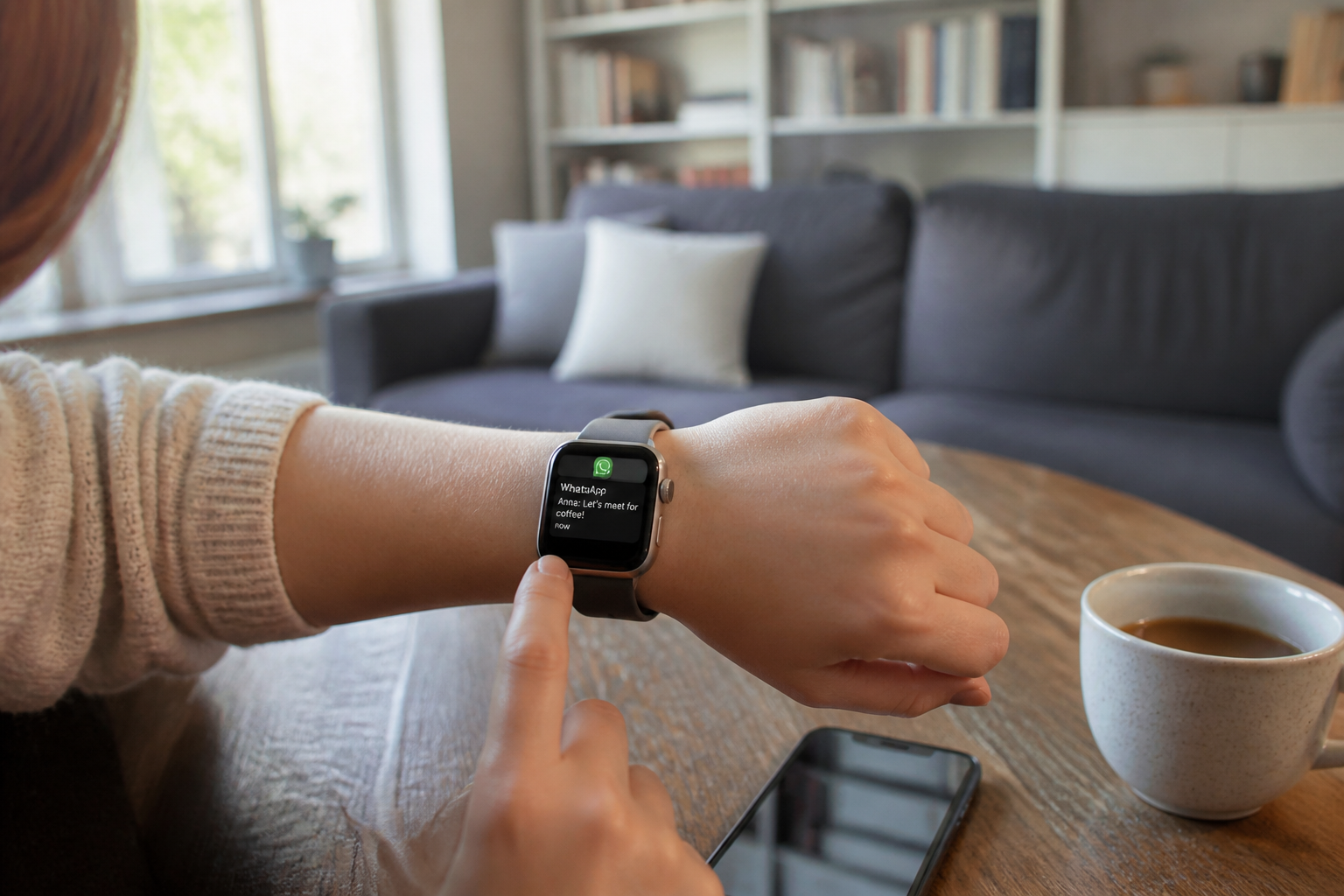
A reliable GPS system is your safety net for structured training sessions. If your sense of direction leaves something to be desired, your watch will act like a trail of breadcrumbs to guide you home.
When swimming, check the water resistance rating closely: a 5 ATM (50 meters) device handles pool laps fine, but is not built for scuba diving. Some advanced options even automatically log stroke styles and count lap lengths for you.
Common Pitfalls That Lead to Buyer’s Remorse
Mistake number one: overspending on a high-end device for minimal use cases. If you only walk thirty minutes a day and simply want to glance at incoming text alerts, dropping $500 on a luxury timepiece is overkill. An $80 fitness band will do the job splendidly.
Mistake number two: ignoring the walled garden ecosystem. Buying a Samsung watch without realizing that elite health features (like ECG or blood pressure monitoring) are locked behind Samsung phone ownership means you lose half the value.
Mistake number three: underestimating battery longevity. Imagine heading out on a week-long trek wearing an Apple Watch. By day three, your battery dies, turning your high-tech gear into dead weight. For frequent travelers and dedicated athletes, battery endurance is every bit as critical as GPS tracking.
Finally, avoid falling purely for stunning aesthetics. A gorgeous watch that fails to sync with your phone or dies within 24 hours will frustrate you in no time. Put functionality ahead of fashion.
Budget Breakdown by Use Case
Here is a realistic pricing breakdown tailored to different lifestyles:
- Under $150 : Fitness bands (Xiaomi, Fitbit, Huawei Band). Basic tracking, no independent GPS, no voice calls. Excellent for everyday wellness monitoring.
- $150 to $300 : Entry-level smartwatches (Amazfit, select Garmin Forerunners, Samsung Galaxy Watch FE). Integrated GPS, solid sports analytics, notification syncing. Great value for mixed usage.
- $300 to $600 : Versatile mid-range models (Apple Watch SE or Series, Samsung Galaxy Watch, Garmin Venu). AMOLED displays, contactless tap-to-pay, app ecosystems, advanced wellness insights. The sweet spot for most consumers.
- Over $600 : Premium flagship timepieces (Apple Watch Ultra, Garmin Fenix, Suunto Vertical). Extended battery runtime, offline topographic maps, rugged build materials, pro-grade sensors. Reserved for hardcore athletes and tech enthusiasts who demand the absolute best.
One Final Thought Before You Buy
Stop hunting for the mythical “perfect” watch on paper. Instead, track down the model that fits your actual routine. If your days are spent at a desk job with weekend jogs, an Apple Watch or Galaxy Watch will suit you wonderfully. If you are a trail runner spending hours tackling rugged peaks, invest in a Garmin Fenix or Suunto instead. And if you merely want gentle move reminders and sleep tracking, an $80 band makes far more sense than a $400 smartwatch you constantly forget to juice up.
The ultimate trap is assuming a piece of technology will magically rewrite your habits. It will not force you to run faster or sleep soundly. It simply supplies data. What you choose to do with that information is entirely up to you.