The home projection sector is currently undergoing a massive technical revolution. For decades, projectors were restricted to dedicated screening rooms requiring complete darkness, bulky ceiling mounts, massive external amplifiers, and enormous budgets. Today, the industry has shifted dramatically toward “lifestyle” or “all-in-one” systems—devices fully capable of acting as direct replacements for standard living room televisions.
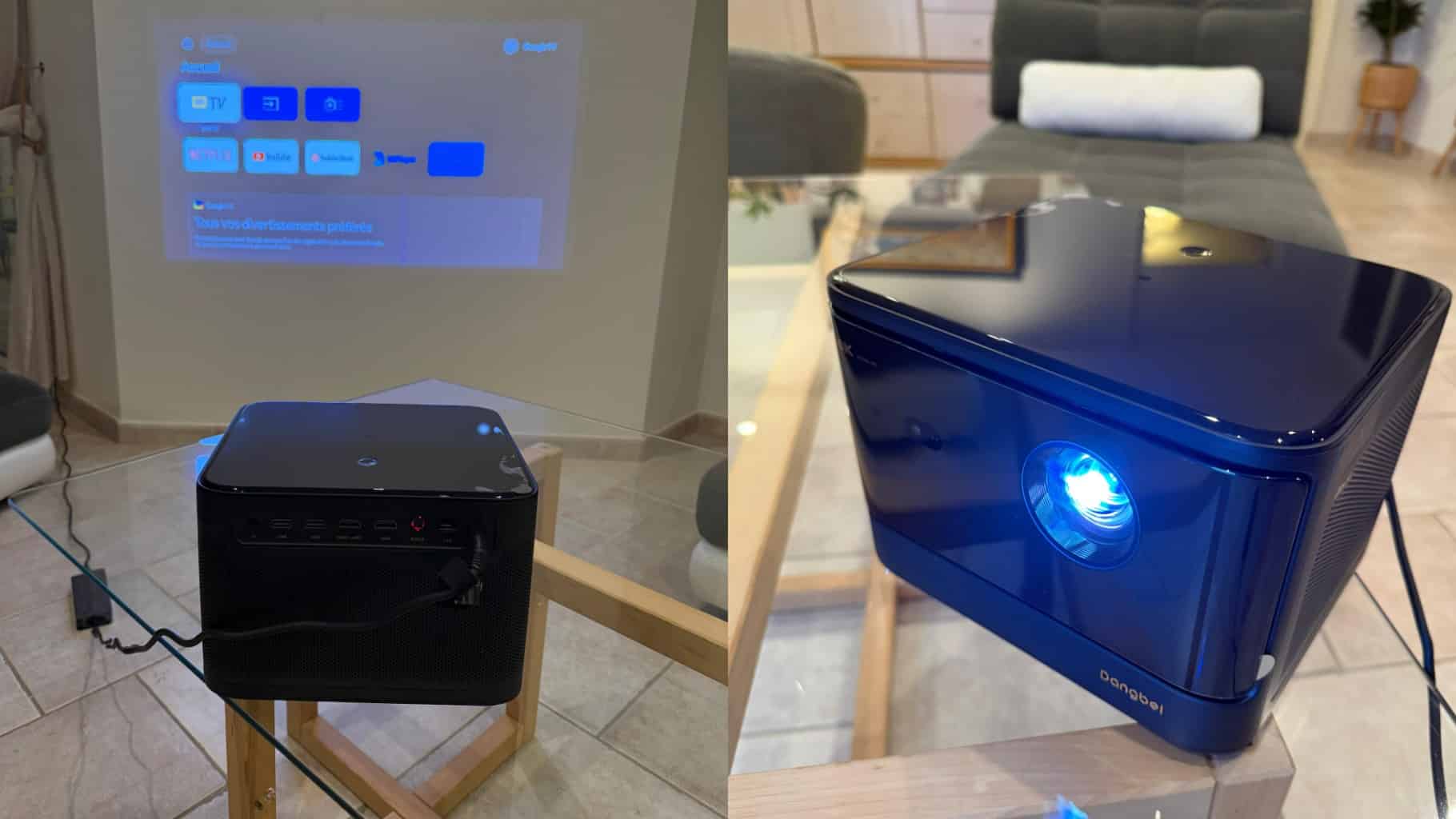
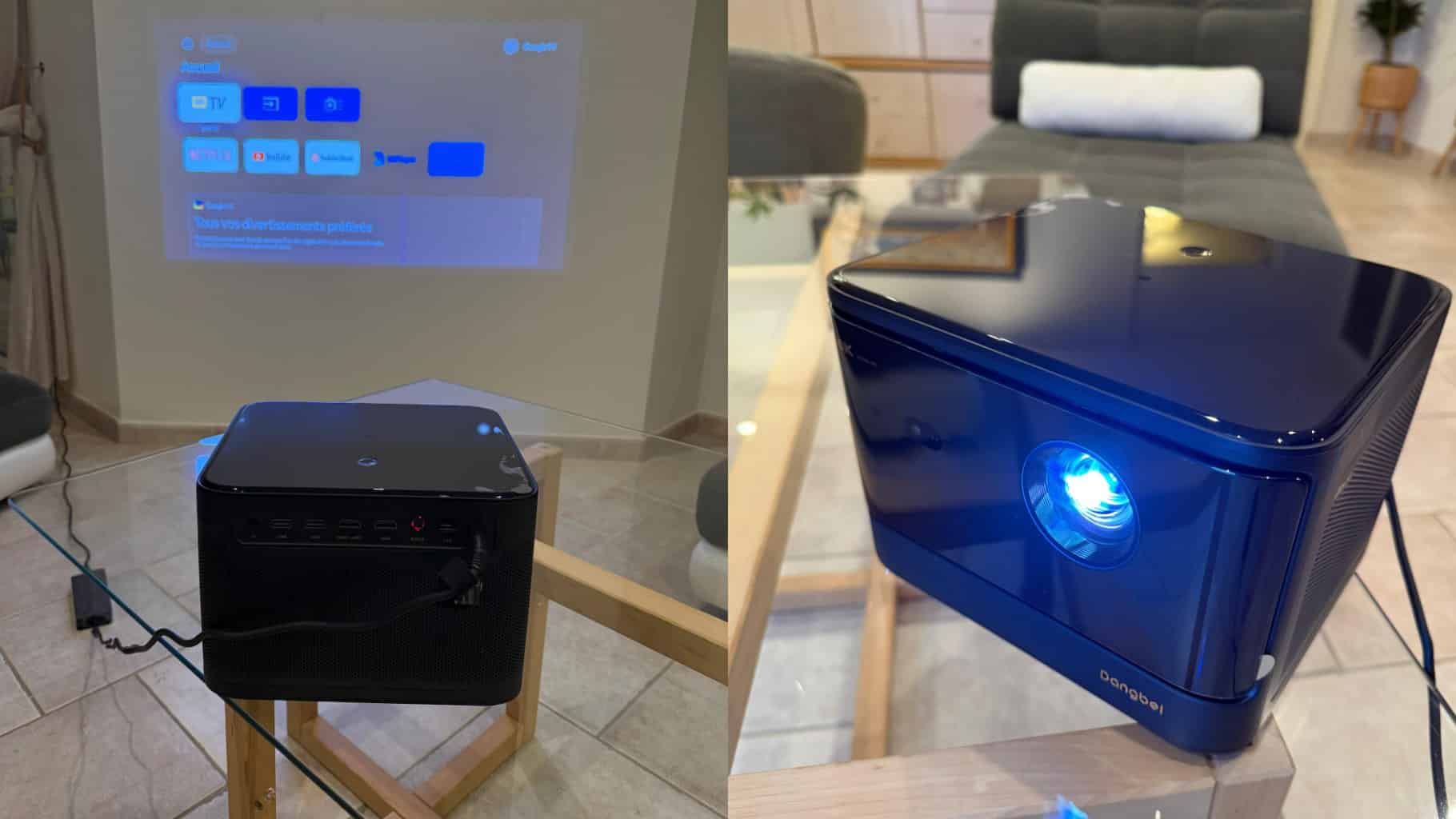
Amidst this intensely competitive climate, Dangbei—already celebrated for its compact models like the Atom and the Freedo—is making a major push with its latest flagship: the Dangbei DBOX02 Pro. Positioned as an ultimate entertainment hub, this gadget merges a high-output laser source, 4K UHD resolution, and Google TV featuring native Netflix support, complemented by an impressive immersive sound setup.
That being said, beyond the high-end spec sheet and heavy marketing hype, it is vital to thoroughly evaluate what the machine can actually deliver. Does the Dangbei DBOX02 Pro manage to strike the ideal balance between brightness, contrast, responsiveness, and usability? The following review breaks down every aspect of this unit to see if it truly deserves a place of honor in the living room of any discerning tech enthusiast.
Pros
- High-Output Laser Engine: 2000 ISO Lumens (ALPD laser) delivering vibrant visuals even in daylight.
- Built-in 360° Gimbal: Rotational stand with a 120° tilt range for absolute placement flexibility (wall or ceiling).
- Google TV & Netflix Integration: A smooth software ecosystem featuring an official Netflix license, which is rare for projectors in this tier.
- InstanPro AI: Blazing-fast automated focus, keystone correction, and obstacle avoidance.
- 600cc Acoustic Chamber: Dual 12W speakers producing surprisingly deep and clear bass.
- Gaming Ready: HDMI 2.1 support, 4K at 60Hz, 1080p at 240Hz, and a controlled gaming input lag (~34.6 ms).
Cons
- Average Native Contrast: Blacks lack depth in complete darkness (inherent to the 0.47 DMD chip).
- Confusing Naming Scheme: Ironically, the “Pro” moniker indicates a model with lower brightness than the base DBOX02.
- Audible Fan Noise: At maximum brightness output, the cooling fans can sound like a small engine.
- No Optical Zoom: Requires physical repositioning or digital zoom degradation to adjust picture size.
- Residual Gray Border: Typical of DLP chips, a faint illuminated border surrounds the projected image.
- Bare-Bones Remote: Unlabeled buttons in places and lacking backlighting for dark room use.
Design Focused on Ultimate Flexibility: The Gimbal Era
There’s no denying that the visual style of the Dangbei DBOX02 Pro represents a clear departure from traditional projector layouts. Older generations relied on complex mounts or bulky tripods, whereas this unit builds the mounting solution right into its chassis.
The Engineering of the Swivel Base
The standout hardware feature here is its heavy metal gimbal stand, offering 360-degree panoramic rotation along the horizontal axis alongside a 120-degree tilt range on the vertical axis. This construction directly tackles the spatial hurdles of modern home cinema. Users can place the projector on an off-center table, angle it toward a corner, or point it straight up at the ceiling to watch movies while lying down. The hinge mechanism holds its position firmly, while the overall weight of 4.60 kg instills an immediate sense of solid build quality.
Chassis, Finishes, and Thermal Management
The body embraces smooth curves, ditching the rigid box shape of the standard model. The finish mixes matte plastics that resist fingerprint smudges with a glossy front panel housing the aspheric lens and environment-detecting sensors. Fitting everything into a compact form factor introduces thermal challenges for the 110-watt laser diode. Cooling is managed by a substantial internal airflow design. Although Dangbei rates noise levels below 24 decibels, the cooling fans become notably loud at maximum brightness settings.
The Remote Control: Minimalist and Flawed
Control is handled by a Bluetooth remote featuring an integrated microphone. The wireless connection means you don’t need line-of-sight, though the layout has drawbacks. Some keys lack clear labels, and the lack of backlighting makes nighttime navigation tricky.
Connectivity and Networking: A Comprehensive Media Hub
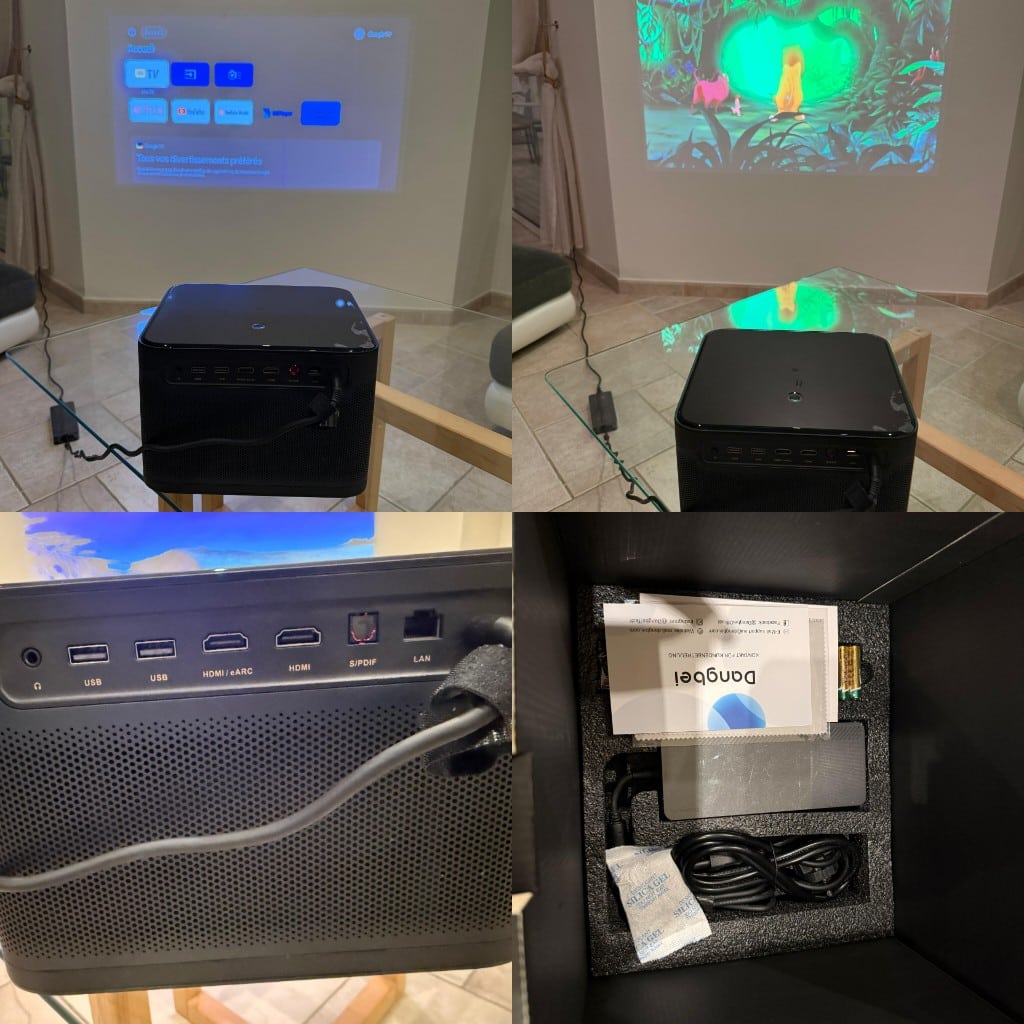
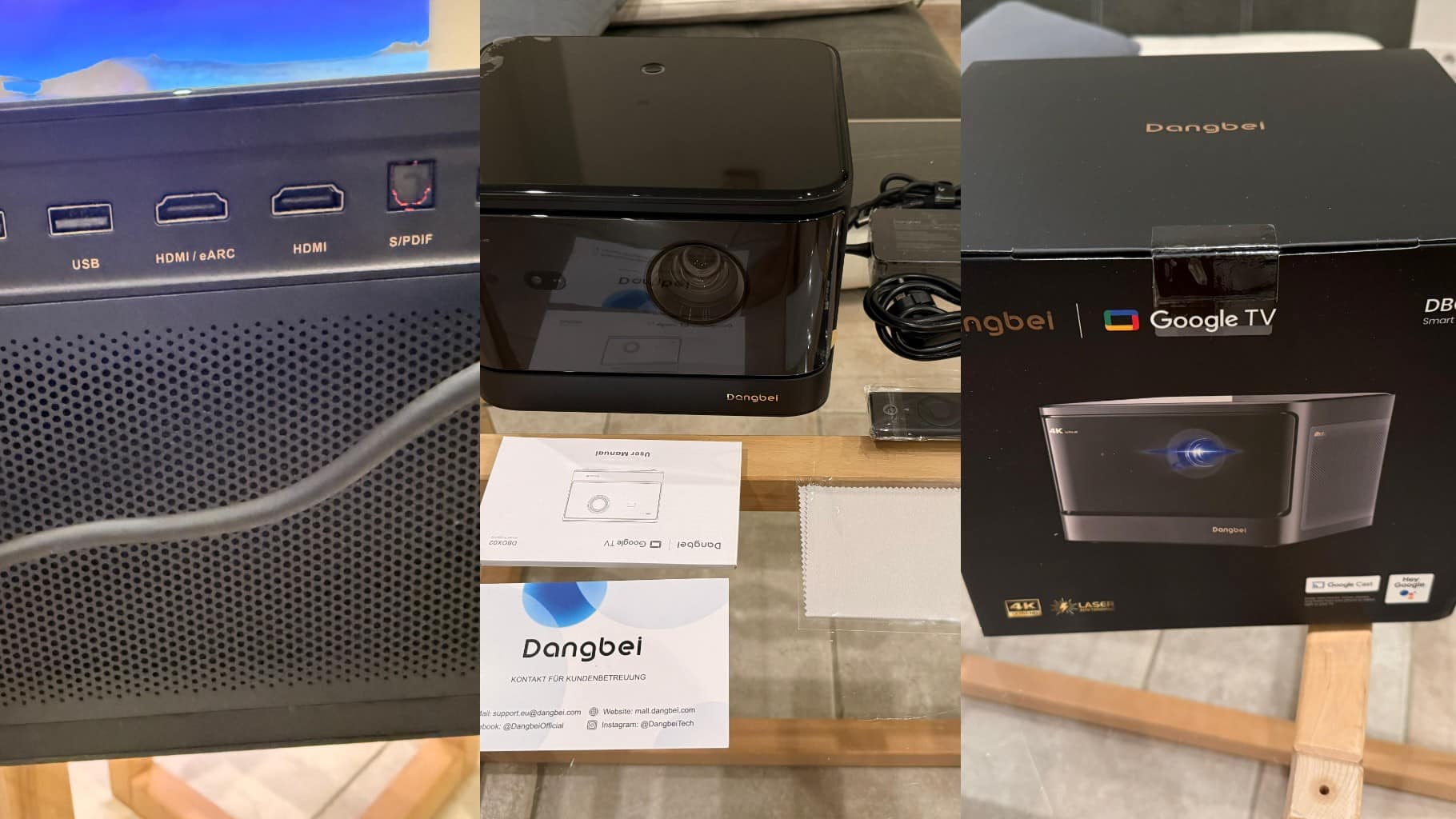
The architecture of the DBOX02 Pro aims to pull all home media feeds together. Ports are clustered neatly on the back and base, bypassing the usual limitations found on portable projectors.
| Port / Connection | Technical Specification | Primary Use Case |
| HDMI 1 | HDMI 2.1 (with eARC) | Next-Gen Consoles (PS5, Xbox), High-end Soundbars |
| HDMI 2 | HDMI 2.1 | Gaming PCs, 4K Blu-ray players, External TV boxes |
| USB | 2x USB 2.0 | Local media playback, Accessory power |
| Optical Audio | S/PDIF | Connection to traditional Home Theater receivers |
| Analog Audio | 3.5mm Jack | Wired headphones, Desktop speakers |
| Wired Network | LAN (Ethernet) | Lag-free, lossless 4K streaming |
| Wireless Network | Wi-Fi 6 (802.11ax) Dual-band | High-speed streaming, Google Cast |
| Bluetooth | Version 5.2 / BLE | Wireless headsets, controllers, external speakers |
HDMI 2.1 supplies ample bandwidth for complex video signals, while eARC support routes uncompressed audio straight to external equipment. While it’s disappointing to see USB 2.0 instead of USB 3.0, Wi-Fi 6 easily picks up the slack for wireless streaming tasks.
Display Tech and Color Science: The Raw Power of LaserVibe
To project images ranging from 40 up to over 300 inches diagonally, the Dangbei DBOX02 Pro utilizes a sophisticated blend of an advanced laser light engine and ultra-fast optical processing chips.
The ALPD (Advanced Laser Phosphor Display) Optical Engine
Older projectors relied on mercury lamps that generated excessive heat and lost color accuracy after just a few thousand hours. Dangbei utilizes ALPD tech here, paired with their “LaserVibe” optimization. ALPD uses an array of blue laser diodes, where part of the light beam hits a phosphor color wheel to produce red and green.
This approach successfully eliminates laser speckle, sparing viewers from grainy artifacts across bright scenes. The light source is rated for a massive 30,000 hours. At four hours of daily use, the projector can run for over twenty years without maintenance, while cutting power usage in half compared to older bulb systems.
The 4K Illusion Powered by Texas Instruments
Achieving 4K resolution at this price point requires clarification. The projector does not feature a native 8.3-million mirror array—that technology is reserved for very costly professional gear. Instead, the DBOX02 Pro relies on a 0.47-inch DMD chip leveraging DLP tech.
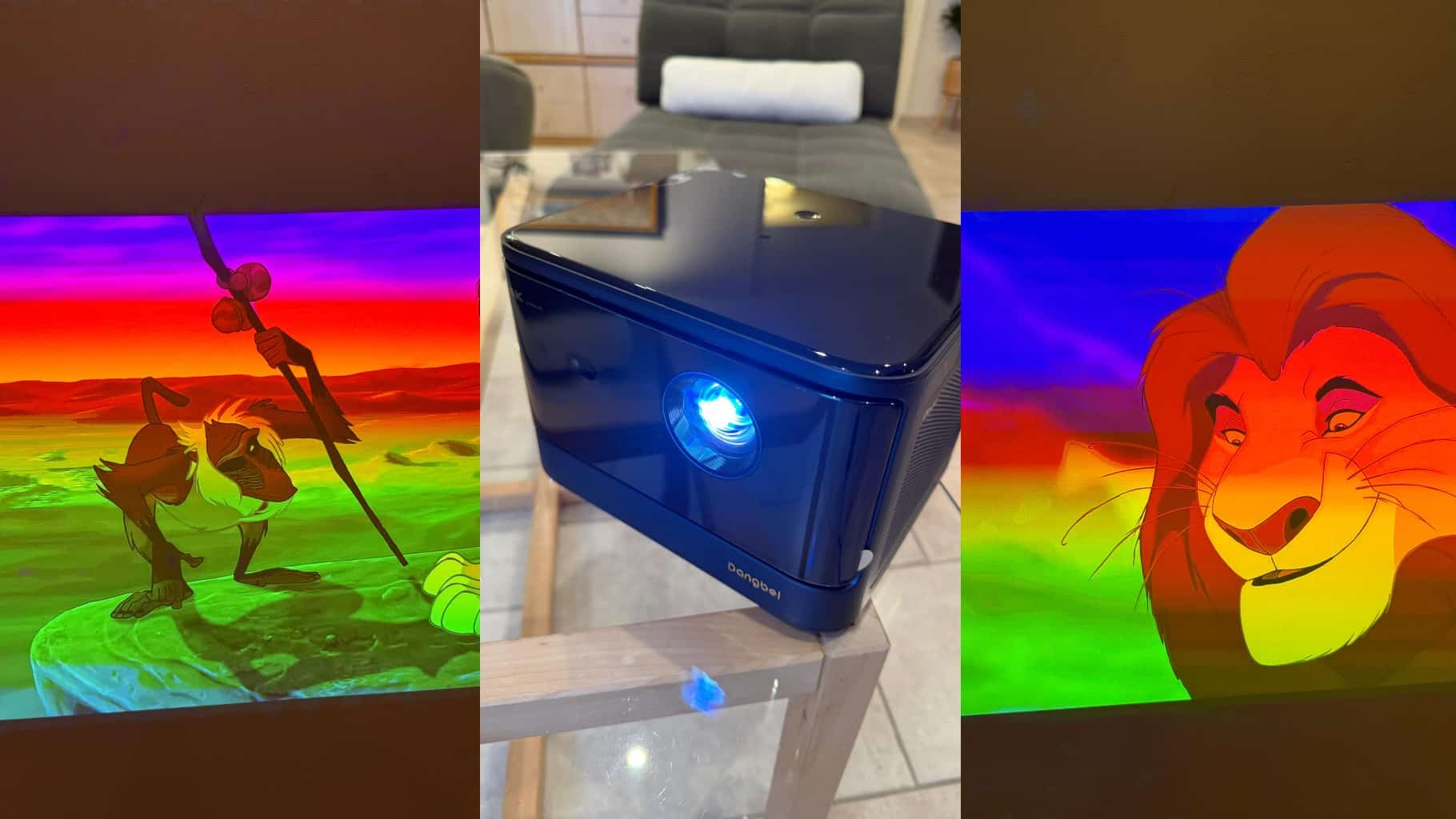
The native resolution of this chip sits at 1920 x 1080 pixels. XPR pixel-shifting technology vibrates the image matrix four times per frame to create an UHD-compliant output. The resulting clarity lets viewers pick out fine details with impressive precision.
Punchy Brightness Output
Boasting 2000 ISO Lumens, the projector punches well above its weight in brightness. Images remain easily viewable during the daytime, making it a viable TV stand-in for living areas. 10-bit color processing handles HDR10+ and HLG content cleanly without washing out bright highlights.
The Achilles’ Heel: The Challenge of Contrast and Deep Blacks
The true test for any display device is its handling of deep, absolute blacks. And this is precisely where optical physics meets hardware limitations. The DMD chip suffers from inherent light leakage; a tiny fraction of photons escapes through the lens even when displaying a black signal. In a pitch-black room, this limitation is apparent. Native contrast struggles to clear a 600:1 ratio, meaning dark areas lean toward a bright charcoal gray—which stands out noticeably during space sequences or dark cinematic scenes.
This issue is compounded by DLP overscan, where inactive mirrors generate a faint gray border around the frame. This artifact can mostly be hidden by using a projector screen with light-absorbing black borders. While the projector excels in lit environments, it forces compromises in dark viewing spaces. Hardcore movie fans will notice the gap compared to higher-end tech like LCoS.
AI and Setup: The Magic of InstanPro AI
Manual projector calibration is a thing of the past. Dangbei includes the “InstanPro AI” toolkit to make setup effortless for everyday users. The front-facing sensor suite pairs a dToF module with a CMOS camera to map the room in 3D. Whenever the projector is moved, an automated calibration routine kicks off.
- Continuous Autofocus: dToF measures distance accurately, allowing the lens to adjust for crisp focus instantly.
- Auto-Keystone: If projected at an angle, smart algorithms reshape the output into a geometrically sound rectangle.
- Obstacle Avoidance & Screen Fit: AI spots items on the wall and shrinks the display to dodge them, or snaps the image directly inside designated screen borders.
Using these digital correction tools disables a portion of the pixel matrix, leading to a slight drop in brightness and resolution. It can also increase input lag, which is bad for gaming. For the best fidelity, placing the unit squarely in front of the screen remains ideal.
Navigation, OS, and Software: The Google TV Advantage
Many projectors struggle with official platform certifications like Netflix, often running modified versions of Android that require clunky third-party workarounds or external streaming sticks to get 4K playback. The Dangbei DBOX02 Pro skips this hassle by running official Google TV, powered by a quad-core processor and 2GB of RAM.
Dangbei’s key victory here is securing an official Netflix license. Everything runs smoothly right from the start. The Google TV interface gathers all your streaming subscriptions on a responsive homepage, and built-in Google Cast makes sharing content from phones simple. This certified software ecosystem is a major selling point.
Audio and Gaming: Uncompromising Multisensory Immersion
Home entertainment requires a balanced approach: stellar visuals must be matched by equally capable sound and responsiveness.
The Acoustic Chamber Triumph
Projector audio is notoriously poor, but the DBOX02 Pro turns out to be a pleasant surprise. The housing contains dual 12-watt speakers paired with a spacious 600-cubic-centimeter acoustic chamber. This internal volume delivers richer bass than rivals, while Dolby and DTS Virtual:X processing adds spatial depth and clearer dialogue. Built-in sound is more than adequate for average rooms without needing an immediate soundbar upgrade.
Putting the DBOX02 Pro Through Its Gaming Paces
Gaming on a 100-inch display with modern consoles is quite a treat. Thanks to HDMI 2.1, the projector supports 4K at 60 fps, alongside an option to boost refresh rates to 240Hz at 1080p for extra smoothness. Enabling “Game Mode” drops input lag to around 34.6 ms—otherwise, image processing delays can push latency past 160 ms. This response time handles action titles and racing games just fine, though hardcore esports players might find it a bit sluggish.
Navigating the Lineup: Naming Confusion Explained
Before wrapping up, clearing up the marketing clutter surrounding the product names is essential, as it has been a hot topic on enthusiast forums. The product family tree breaks down as follows:
- Dangbei Mars Pro 4K (2023): The older flagship model, praised for sharpness but held back by a locked-down Android OS.10
- Dangbei Mars Pro 2 (May 2024) rebranded as DBOX02: The direct successor. A brightness powerhouse (2450 ISO Lumens) with built-in Google TV, though it sticks to a traditional box shape without a swivel base.7 Its MSRP sits around $1,899.8
- Dangbei DBOX02 Pro (Tested here): Released later, countering intuition by using the “Pro” suffix.7 It actually features slightly lower peak brightness (2000 ISO Lumens vs 2450), but offers superior physical design thanks to an integrated 360° gimbal stand.4 MSRP sits near $1,599 (often discounted between $899 and $1,349).1
| Model | Light Source | Rated Brightness | Integrated Stand (Gimbal) | Approximate MSRP |
| Dangbei DBOX02 | ALPD Laser | 2450 ISO Lumens | No (Fixed body) | ~ $1,899 / € |
| Dangbei DBOX02 Pro | LaserVibe (ALPD) | 2000 ISO Lumens | Yes (360° Rotation, 120° Tilt) | ~ $1,599 / € |
| Competitor: XGIMI Horizon Ultra | Laser/LED Hybrid | 2300 ISO Lumens | No | ~ $1,899 / € |
| Competitor: JMGO N1S Pro | Triple Laser | 2000 CVIA Lumens | Yes | ~ $1,499 / € |
The “Pro” badge here highlights better ergonomics via the built-in stand. Your choice will depend on priorities: pick the DBOX02 for maximum brightness, or the DBOX02 Pro for total setup flexibility.
Our Final Verdict on the Dangbei DBOX02 Pro Projector
The Dangbei DBOX02 Pro highlights how far home projection technology has evolved. It transcends its identity as a simple display tool to become a complete, standalone, and remarkably smart entertainment hub. The combination of a bright laser engine and InstanPro AI simplifies operation, while certified Google TV with Netflix support gives it a major edge over competitors. Lastly, the gimbal chassis removes placement headaches in the living room.
The 0.47-inch DMD chip still necessitates compromises, such as limited black depth and minor residual border light, while the cooling fans can be noticeable during quiet movie moments at full power. Nonetheless, the Dangbei DBOX02 Pro delivers fantastic value, especially when found on sale. It’s built for anyone wanting a massive, user-friendly screen. This isn’t just a great projector; it’s a legitimate alternative to a standard living room TV.
- Design, Ergonomics & Setup: 9.5 / 10 (The gimbal and InstanPro AI are near-flawless, offset only by an unlit remote).
- Image Quality & Brightness: 8.5 / 10 (Great daytime performance and sharp 4K, though limited blacks hinder theater-room conditions).
- Operating System & Software: 9.5 / 10 (The Google TV and native Netflix pairing is a game-changing selling point).
- Audio & Operating Noise: 8.0 / 10 (The 600cc sound chamber sounds great, but fan noise at max output lowers the score).
- Value for Money: 9.0 / 10 (Especially during sales, the overall value proposition is hard to beat).