
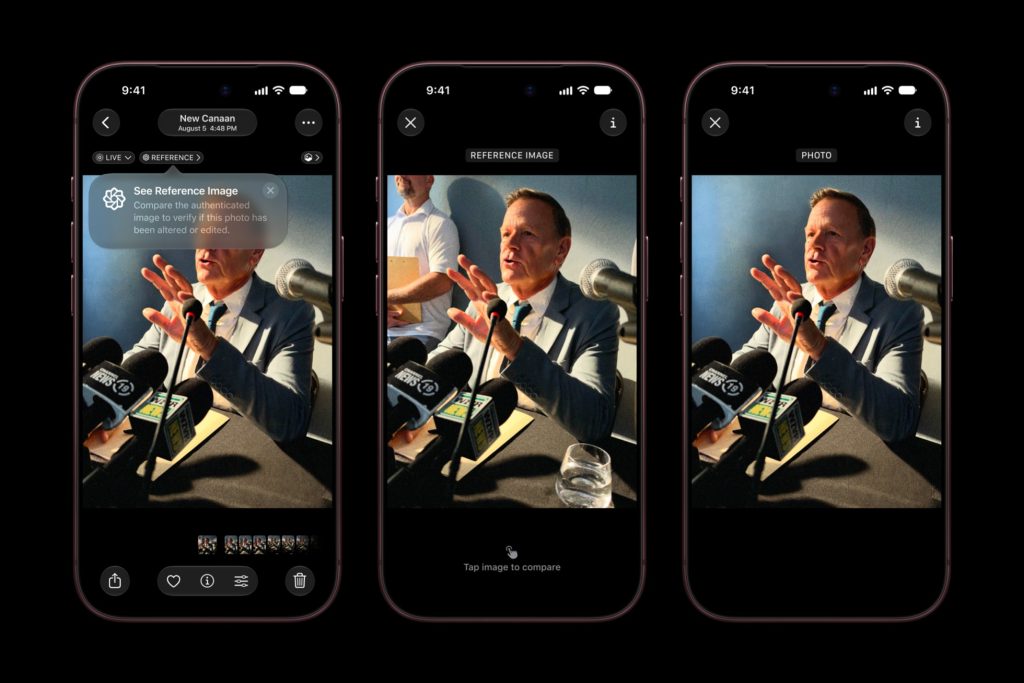
Amid a surge of AI-generated content flooding the web, Apple aims to restore confidence in photos taken with its iPhones.
At its recent Surprise and Shine event on Wednesday, the tech giant unveiled Apple Reference Image—a tool designed to verify the authenticity of snapshots captured on the iPhone 18 Pro.
“For photographers and photojournalists, this tool is essential,” Apple noted.
Whenever a user snaps a picture, the primary camera sensor records cryptographically signed raw sensor data. Apple’s Private Cloud Compute then processes this information into an “unalterable image” accessible within the Photos app. This master reference file can be checked against modified versions to detect any editing. Apple describes this reference image as the modern equivalent of a “digital negative.”
Although viewing reference images is currently restricted to the native Photos app, third-party developers will soon be able to build this verification functionality into their own software using newly released APIs.
Additionally, Apple confirmed support for the SynthID protocol, making it easier for users to spot pictures that have been generated or modified using artificial intelligence.
Apple Reference Image represents just one component of a broader push to revamp the camera experience across both hardware and software.
To make this possible, Apple engineered a custom lens alongside a sophisticated mechanism featuring six laser-cut blades—each crafted from a specialized polymer composite thinner than a strand of human hair—driven by a brand-new internal rotor system.