
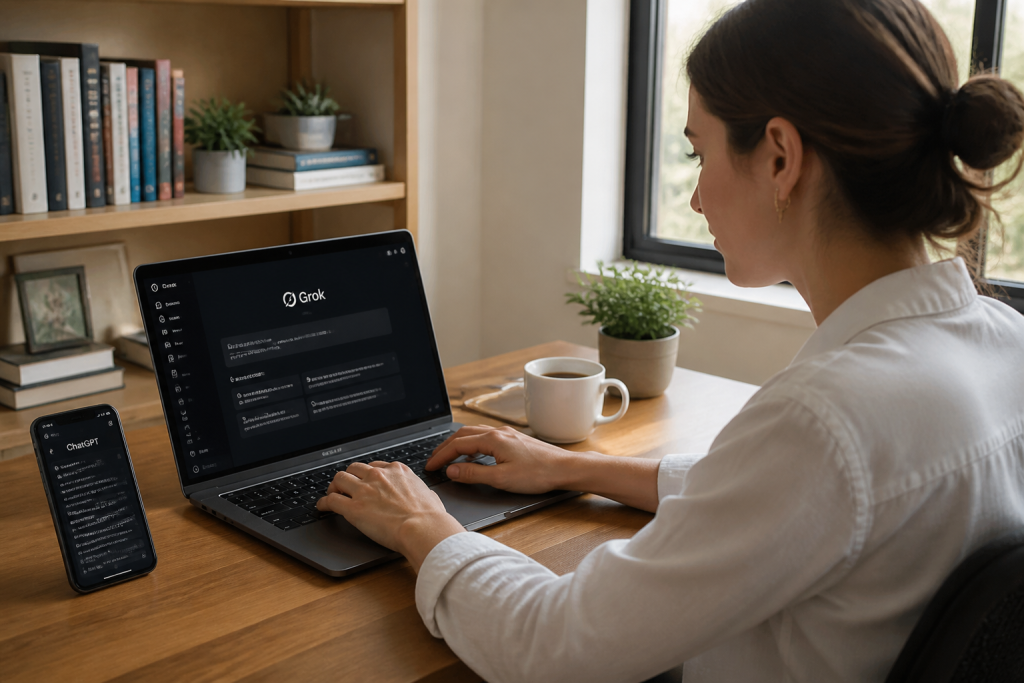
Ever since Grok entered the market, comparing it to ChatGPT has become practically mandatory for anyone following AI assistants. Yet, these two tools serve fundamentally different purposes. One prioritizes immediacy and a distinct personality, while the other focuses on versatility and a mature ecosystem. Choosing between them isn’t simply a matter of raw performance; it depends on your day-to-day workflow, your need for real-time news, and your tolerance for content filters.
How do Grok and ChatGPT position themselves in the marketplace?
Introduced in late 2022 by OpenAI, ChatGPT has established itself as the leading conversational AI globally, boasting nearly 900 million weekly active users by 2025. Its growth has been steady, backed by a strategic partnership with Microsoft. The platform takes a cautious approach: every feature undergoes rigorous testing before seeing a widespread rollout. As a result, ChatGPT offers a robust ecosystem of integrations that remains hard to beat, whether through its API, custom GPTs, or advanced coding assistants.

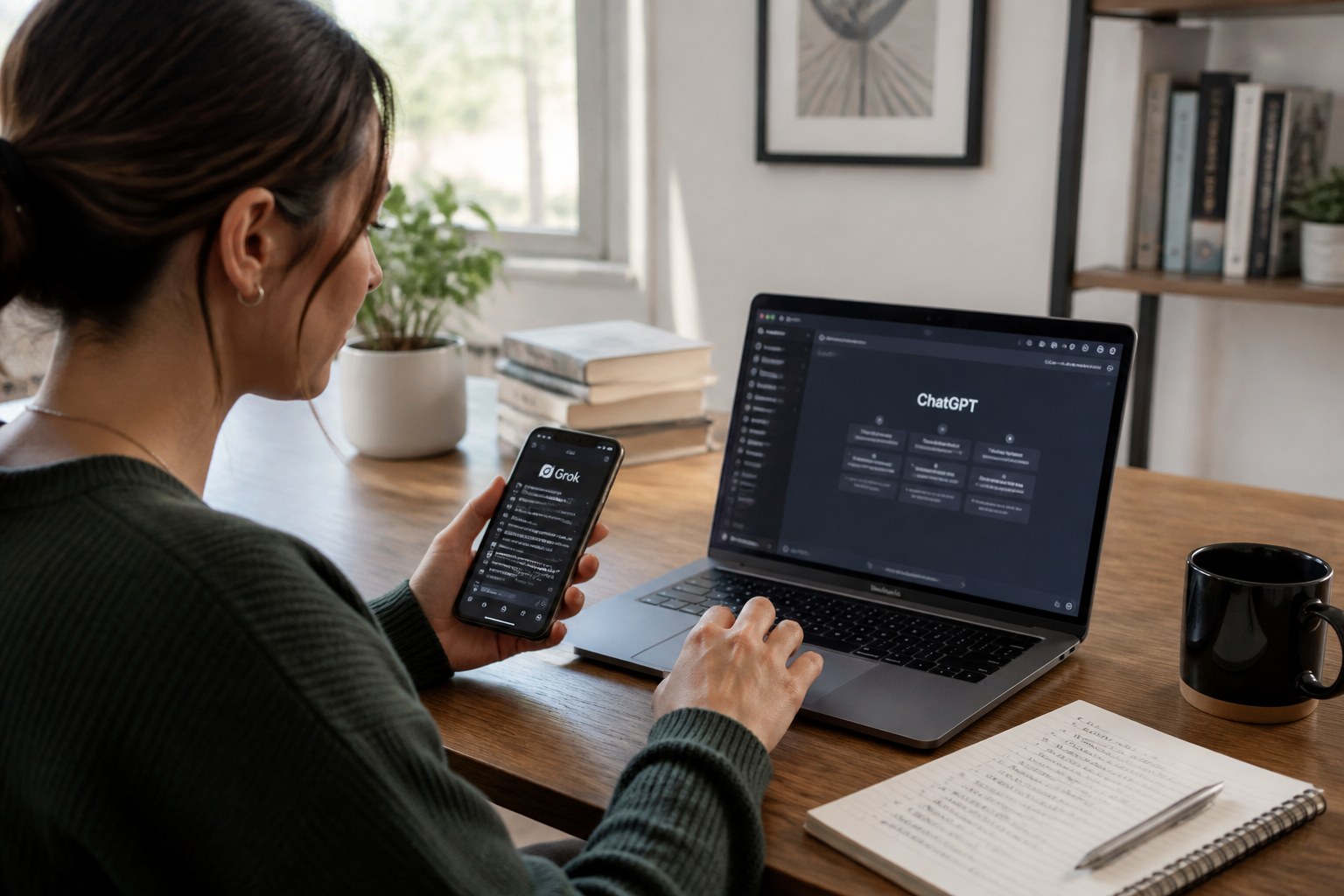
In contrast, Grok emerged from xAI’s labs in 2023 with a completely different trajectory. Led by Elon Musk and backed by SpaceX since early 2026, the company chose a fast-paced innovation model. New features are shipped rapidly, even if they need fine-tuning afterward. This philosophy has enabled Grok to quickly roll out image and video generation tools, coding agents, and document creation features. However, its standout feature remains its native integration with X (formerly Twitter), granting it constant access to the global news cycle—an advantage no rival has managed to replicate so far.
What are the differences in available models and access tiers?
Both platforms offer free and paid options, but the conditions for accessing them vary quite a bit.
| Criteria | Grok | ChatGPT |
|---|---|---|
| Free Model | Grok 4.3 (with usage caps) | GPT-5.5 Instant |
| Highest-End Paid Model | Grok 4 Heavy | GPT-5.5 Thinking / Pro |
| Real-Time News Access | Native X integration | Web search via paid tiers |
| Estimated Active Users (2025) | 35 million monthly | 600 million monthly |
Grok is currently restricted to X Premium+ subscribers, which naturally limits its user base. Meanwhile, ChatGPT is accessible via web and mobile with a functional free tier, reaching a significantly larger audience. This difference in scale is significant, highlighting two distinct commercial strategies. OpenAI aims for mass-market adoption, whereas xAI initially targets active X users.
What are the unique strengths of each assistant?
Grok: breaking news and uninhibited tone
Grok’s power rests on three main pillars. First, its direct and continuous pipeline to X data allows it to tackle breaking news, viral trends, and ongoing debates effortlessly. Second, its casual, sometimes irreverent tone sets it apart from AI assistants that usually try to remain neutral and diplomatic. Lastly, Grok features a “fun” mode alongside a standard mode, giving users the freedom to adjust the conversational style.
In practice, Grok shines in scenarios such as:
- Tracking live community reactions on X during major political or sporting events
- Analyzing social media trends based on active public posts
- Obtaining unfiltered perspectives on controversial topics without corporate sanitization
- Crafting high-impact content for social media channels
Keep in mind, though, that image generation via its Aurora model tends to follow prompts less faithfully than DALL-E and can occasionally produce sensitive material like deepfakes. Moderation is noticeably looser here, which can either be an asset or a drawback depending on your needs.
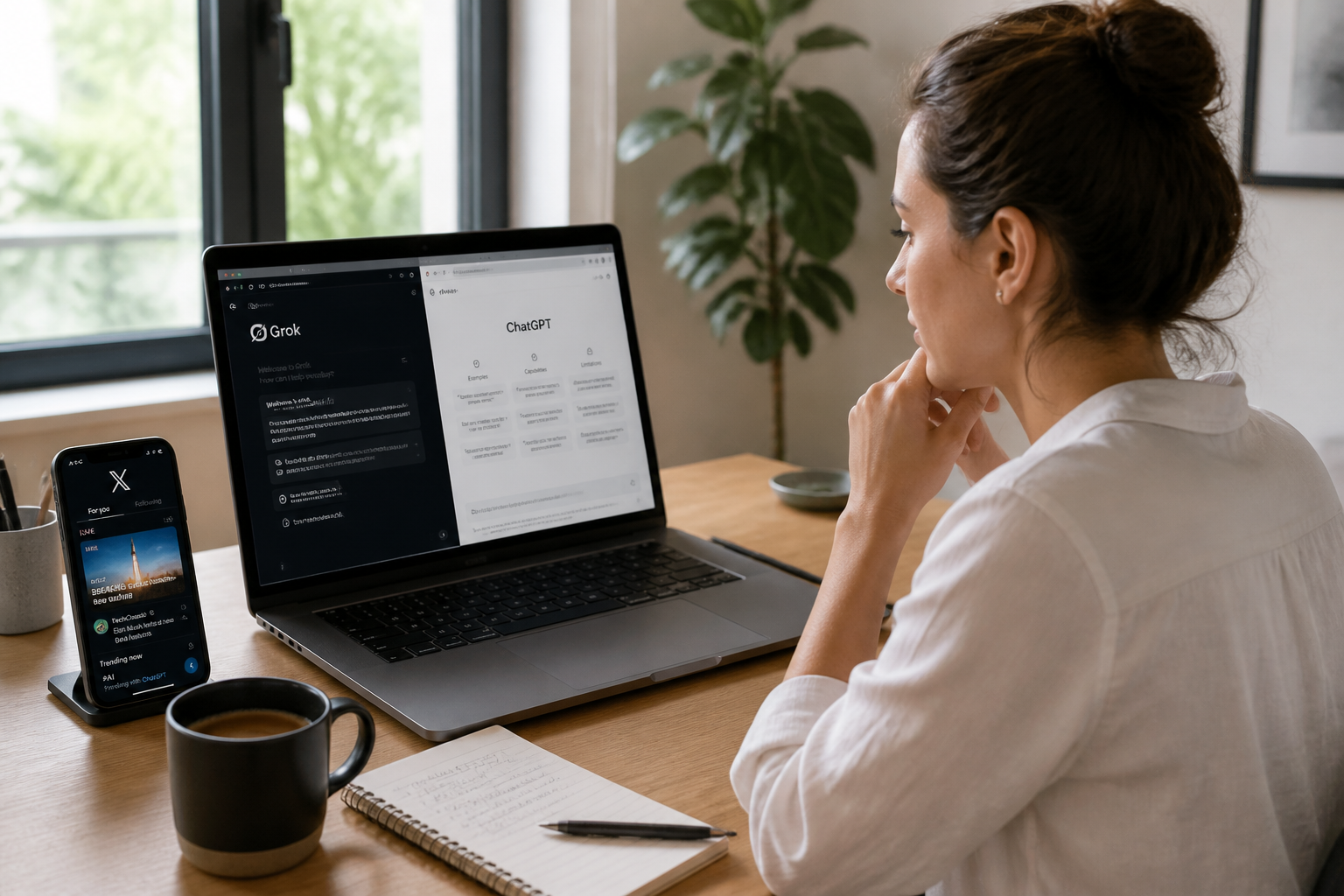
ChatGPT: all-around versatility and a mature ecosystem
ChatGPT is built for broad utility. Powered by GPT-5.5, it handles everything from creative writing and complex software development to data analysis and image creation via DALL-E with ease. Its ecosystem includes:
- Community-crafted custom GPTs (specialized coding tutors, creative writing partners, etc.)
- An advanced voice mode for natural spoken conversations
- A comprehensive API powering thousands of third-party applications
- Built-in data analysis utilities
Where Grok wins on speed and reactivity, ChatGPT impresses with stability and consistency. When it comes to drafting structured articles, putting together business reports, or solving complex math problems, ChatGPT retains a clear edge. Its strict ethical guardrails—though occasionally criticized for being overly restrictive—also ensure a safe environment for enterprise use.
What pitfalls should you avoid when choosing between them?
The first mistake is assuming one option is objectively “better” in every scenario. In reality, they complement one another: Grok is built for speed and current events, while ChatGPT excels at deep work and adaptability. The second trap is underestimating how crucial the broader ecosystem is. An AI assistant is only as good as the tools supporting it. If your workflow relies on APIs, custom GPTs, or software integrations, ChatGPT delivers a vastly superior environment.
A third error is ignoring the limitations inherent to each platform. Despite its strengths, Grok remains tethered to the X platform and its specific user base. If you rarely use that social network, its primary selling point loses value. Conversely, ChatGPT might feel overly sanitized for users seeking unfiltered takes on sensitive subjects. Finally, be skeptical of benchmark scores; tests are frequently run under varying parameters, making direct comparisons misleading.
Which AI assistant should you pick for your daily routine?
The right choice comes down to your personal priorities. If your main objective is tracking live news, analyzing real-time conversations on X, or getting unfiltered answers to controversial questions, Grok is the ideal tool. Its native integration with X gives it an unbeatable edge for these tasks, and its anti-woke philosophy appeals to those frustrated by overly cautious moderation.
On the other hand, if you need a dependable general-purpose assistant for writing, programming, data processing, or collaborative projects, ChatGPT remains the safest bet. Its mature ecosystem, expansive integrations, and massive user community make it an indispensable asset for daily professional tasks.
For those with the budget to maintain both subscriptions, their synergy is undeniable: use Grok for breaking news and trending topics, and rely on ChatGPT for substantive work. However, if you have to choose just one, ask yourself a simple question: do you need instantaneous updates or deep versatility more? Your answer will point you straight to the tool that fits your lifestyle.