

In a move touted as the largest public transaction for methane-reduction credits in rice agriculture to date, Google has committed to purchasing 1 million carbon credits by 2030 from Indian climate-tech firm Mitti Labs.
Spanning a four-year period, this agreement will involve rice paddies in the Indian states of Karnataka, Andhra Pradesh, and Telangana, eventually scaling to encompass roughly 100,000 hectares, according to Mitti Labs co-founder Xavier Laguarta. The financial details of the transaction remain confidential.
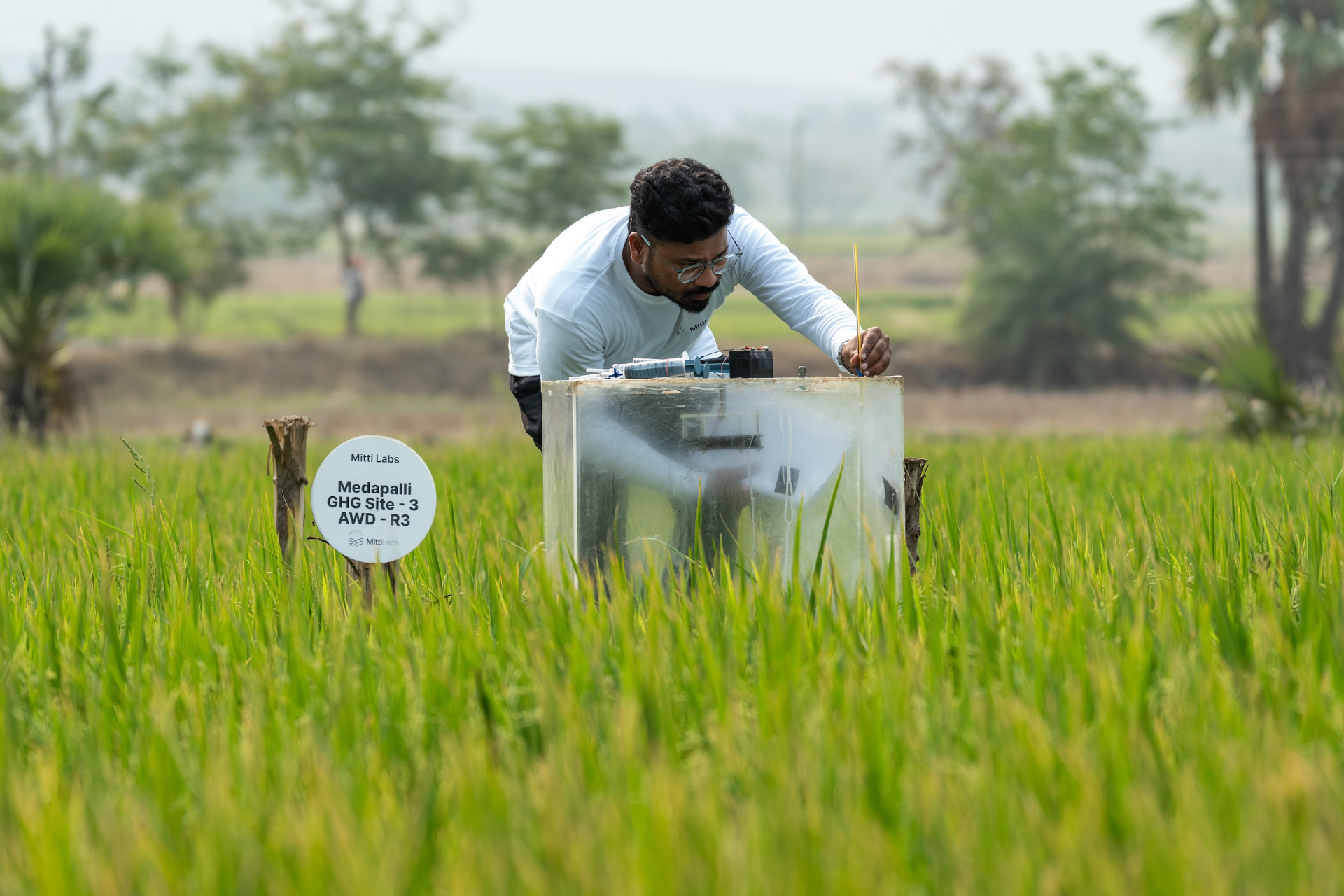
Under the initiative, agricultural workers will receive incentives to implement techniques that shorten the duration rice paddies are submerged. This approach curtails methane emissions during the growing cycle and conserves water. Mitti Labs estimates that these methods can slash methane output by approximately 50% and water consumption by 40% while maintaining consistent crop yields.
This partnership is established as Google works toward its ambitious 2030 net-zero emissions target, a goal complicated by its massive investments in energy-intensive artificial intelligence infrastructure. According to its June environmental report (PDF), the tech giant’s greenhouse gas footprint rose 18% year-over-year in 2025, reaching roughly 14.5 million metric tons of CO2 equivalent.
Discussions between the two companies kicked off roughly a year ago, Laguarta shared in a conversation, at a time when Google was looking to diversify its carbon-credit holdings with methane-reduction ventures. Google’s interest was captured by the project’s water-saving benefits and the startup’s capacity for large-scale deployment.
Over the last two years, the climate-tech firm’s initiatives have preserved over 500 billion liters of water. Laguarta noted that the agreement with Google will catalyze further expansion, providing the momentum required to collaborate with major corporate clients.
“Securing a commitment from Google, one of the market’s most meticulous buyers with highly thorough vetting standards, serves as a powerful validation for our business,” Laguarta remarked, emphasizing how the deal will accelerate Mitti’s expansion.
Before finalizing the contract, Google conducted thorough technical assessments of Mitti’s tracking systems and carried out on-site farm inspections, Laguarta explained. Established in 2023 and headquartered in New York and Bengaluru, the startup utilizes a GeoAI platform. This technology pairs satellite radar observations with direct field data to track soil moisture levels, inundation, and crop development across smallholder properties.
Operating with commercial and public synthetic aperture radar imagery, the platform leverages resolutions between 50 centimeters and 10 meters. Furthermore, Mitti refines its proprietary AI models using proprietary field data collected directly on the ground.
The carbon offsets acquired by Google will be certified through either Isometric or Gold Standard, two leading registries, Laguarta noted. He also pointed out that all initiatives are subject to rigorous, independent third-party audits prior to issuance.
Beyond its partnership with Google, Mitti Labs collaborates with other major clients such as carbon trading platform Cool Effect, agricultural giant Syngenta, and food company Ebro Foods. Laguarta confirmed that this contract represents the startup’s most significant offtake agreement so far.
While Mitti Labs currently supports over 100,000 agricultural producers, it aspires to partner with millions of growers by the end of the decade. According to Laguarta, the backing from Google provides the essential resources to propel them toward this objective.
Though Laguarta declined to specify the exact compensation rates for the agricultural workers participating in this particular project, he highlighted that the bulk of the generated project revenues goes directly back to local farming families.
Although the current Google-supported program is centered in India, Mitti Labs is preparing to launch operations in the Philippines by the end of this year, with plans to expand further into Indonesia and other Southeast Asian nations in 2027.
Pointing out that around 150 million farmers cultivate rice across China, India, and Southeast Asia, Laguarta believes there is massive headroom for market growth as businesses increasingly look to sustainable agriculture to combat methane emissions.
This collaboration with Mitti Labs is not Google’s debut investment in Indian carbon offset initiatives. Back in January 2025, the tech giant teamed up with Gurugram’s Varaha to purchase 100,000 metric tons of credits. This represented Google’s initial major carbon-removal purchase in India and stood as the largest transaction involving biochar produced from biomass.
Google is additionally funding renewable energy infrastructure in India to lower its supply chain footprint. The corporation secured an agreement for a 150-megawatt solar installation in Rajasthan, boosting its total contracted solar output with ReNew in that state to 300 megawatts.