

Since the end of 2024, the European Union has mandated that small electronic devices like smartphones, tablets, and wireless earbuds feature a standard USB-C charging port. The concept is straightforward: one universal charger for everything. However, simply plugging your phone into any available block doesn’t guarantee fast charging, nor does it always deliver maximum wattage. The bottleneck isn’t the gadget itself, but rather the charging ecosystem trio consisting of the adapter, the cable, and the underlying protocol.
While European regulations force manufacturers to adopt the USB Power Delivery (USB-PD) standard with a 15W baseline minimum, third-party power adapter makers face no such constraints regarding protocols or output capacity. Consequently, a wall brick can pass basic CE, RoHS, and ErP safety tests while still failing to provide the juice your mobile phone needs for rapid refueling. Achieving optimal performance relies entirely on seamless compatibility between the charging head, the cord, and the recipient device.

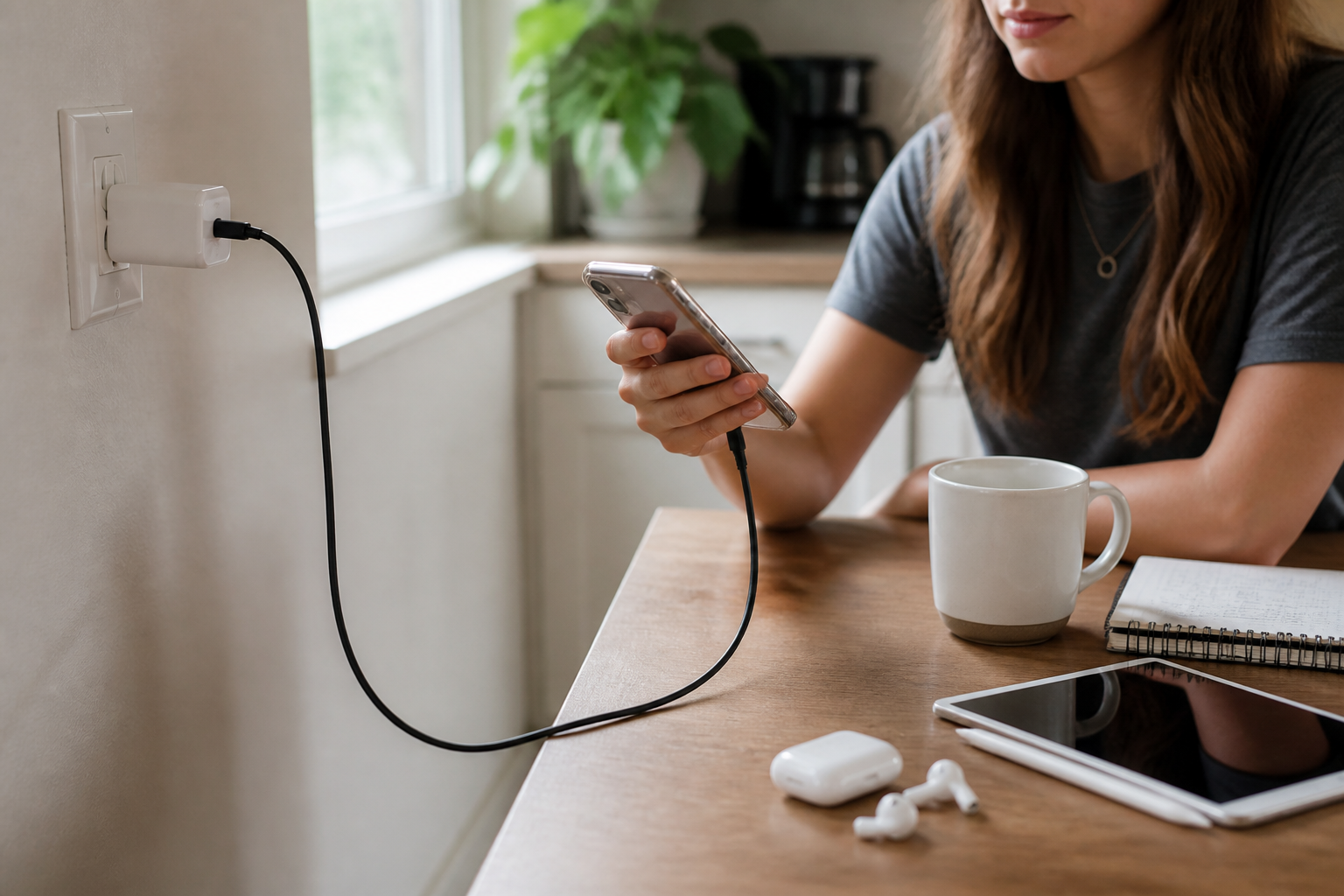
Key Factors to Evaluate Before Purchasing a USB-C Power Adapter
The Power Floor: Never Drop Below 15W
A slow 5W to 10W brick might suffice for overnight top-ups on a smartwatch or earbuds, but modern smartphones and tablets demand more. Fast chargers starting at 15W offer greater versatility: they safely power low-draw accessories while scaling up output dynamically when a thirsty device connects. Aim for at least 15 to 18 watts for everyday phone use, whereas laptops require anywhere from 45W to 100W.
Charging Protocols: USB Power Delivery, QuickCharge, and PPS
Just because an adapter boasts a 30W label doesn’t mean it will charge every gadget at that speed; velocity relies heavily on supported protocols. The industry standard is USB Power Delivery (USB-PD), utilized by recent Android flagships, iPhones from the iPhone 12 onward, and MacBooks. Qualcomm’s proprietary QuickCharge (QC) remains common in mid-range Android handsets, while Programmable Power Supply (PPS) represents an advanced iteration of USB-PD that dynamically fine-tunes voltage, benefiting recent Samsung models especially.
For maximum versatility, select a power supply that supports both USB-PD and PPS protocols to ensure compatibility with the vast majority of gadgets currently on the market.