

Apple is pushing to normalize a new era of personal technology: one where your devices are constantly tuned in to your conversations.
During Wednesday’s “Surprise and Shine” hardware showcase, the most unexpected revelation wasn’t the foldable iPhone. Instead, it was the decision by a traditionally privacy-focused Apple to allow its latest smartwatches to capture real-time audio and convert spoken words into text.
Does this imply you are constantly being recorded whenever you speak to an Apple Watch wearer? Not quite—though the thought alone is bound to make many feel uneasy.
It raises a deeper question: Is this a feature users actually desire, or did Apple rush to implement it out of fear that rivals like OpenAI might beat them to the punch with their own dedicated AI hardware?
Currently, several startups are betting that automatic transcription is a primary selling point for consumer AI. While this usually means documenting business meetings, lectures, or interviews, some hardware developers—such as the creators of the Friend AI pendant and Amazon’s Bee—have designed ambient companions meant to passively log your daily life so you don’t forget important details.
Apple’s approach, however, takes a slightly different path. By introducing tools like “Audio Intelligence,” “Live Rewind,” and “Siri Recap” on its wearables, the tech giant is walking a fine line between practical convenience and what some might view as invasive surveillance.
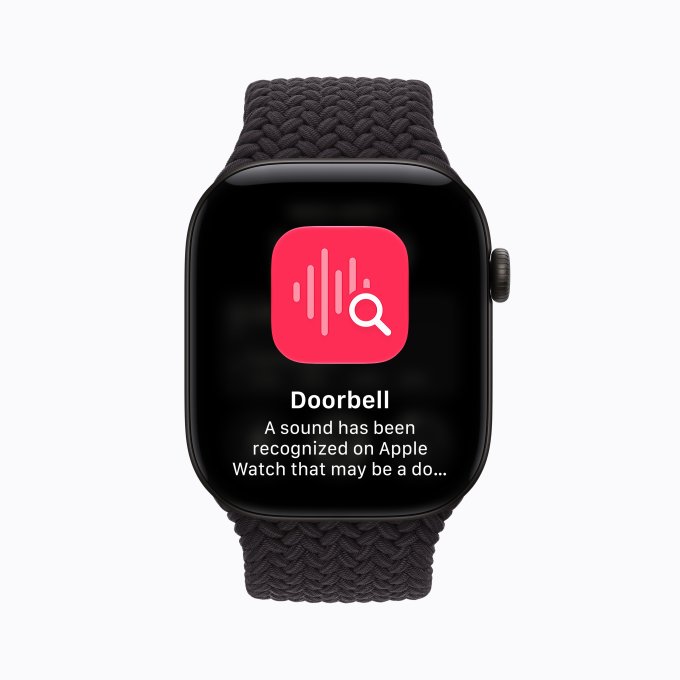
Considered individually, the Audio Intelligence capability is highly beneficial, particularly for those with hearing impairments. By leveraging on-device AI, the watch can detect and notify users of critical environmental sounds like sirens, doorbells, crying babies, or smoke alarms. This processing occurs locally, even without an iPhone nearby, potentially serving as a life-saving tool. Few would argue against this kind of benign utility.

On the other hand, capabilities like Live Rewind and Siri Recap step away from accessibility and enter far more controversial territory.
Although Apple’s robust security framework might ease the minds of some users, normalizing ambient recording seems risky for a brand built on privacy. This shift arrives amid growing public friction surrounding modern monitoring systems such as Flock cameras, heavy-footprint data centers, and AI software globally.
To begin with, the Live Rewind function acts as a retrospective audio capture, allowing you to instantly transcribe the preceding 15 seconds of audio with a quick double-press of the digital crown. The resulting text is stored in Apple’s newly redesigned Siri application for future reference.
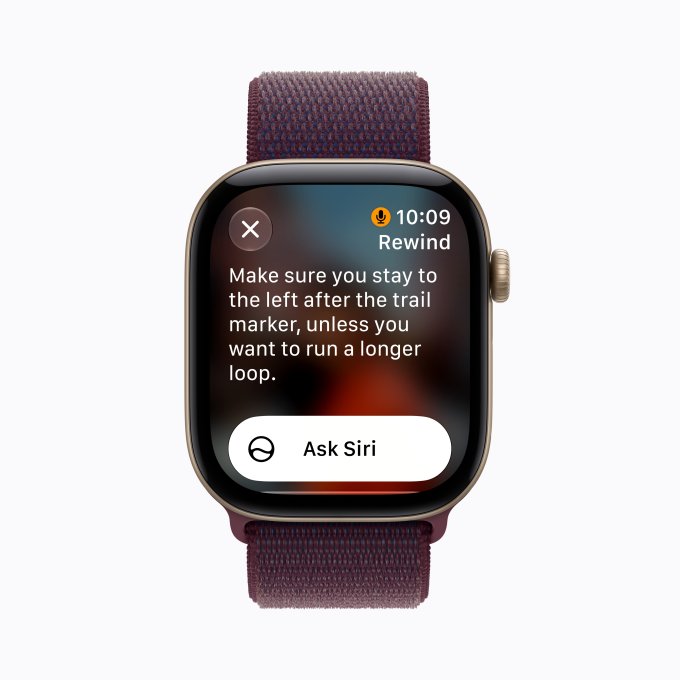
Apple highlights scenarios like catching a quick book recommendation, saving a coworker’s sudden insight, or recovering missed dialogue. However, it also means you can easily document things said in passing by people who never realized they were being recorded.
This raises significant ethical and legal questions regarding user consent. For example, AI recorder company Plaud explicitly reminds its users to get permission before hitting record. Similarly, the terms of service for Amazon’s Bee emphasize that users, not the platform, bear full responsibility for complying with privacy regulations, including those concerning minors.
Because Apple does not store the actual audio files, the legal system’s handling of these text-only summaries remains uncharted. While such generated notes might be introduced in legal proceedings, the absence of matching voice recordings could make them difficult to authenticate. Furthermore, legal standards regarding such digital evidence vary heavily by jurisdiction.
Legal concerns aside, the cultural shift toward constant, watch-based recording carries its own set of social consequences.
As research indicates, the mere presence of recording tech alters how people act in public spaces—a phenomenon exacerbated by social networking and a pervasive surveillance culture. The lingering awareness that any exchange could be logged has a chilling effect on open communication and authentic self-expression.
Capturing photos or video usually demands an obvious action, like raising a phone and pointing it at a subject. In contrast, grabbing a quick block of audio for transcription with a quiet tap of a watch crown is far less conspicuous—even though, according to Apple, the device will play a brief tone and display a microphone animation.
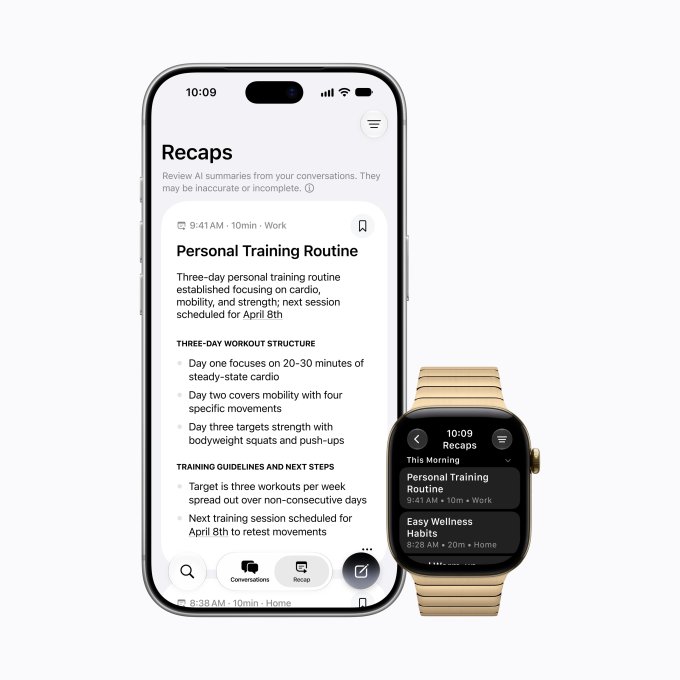
Additionally, the upcoming “Siri Recap” tool relies on passive, ambient listening to draft broad outlines of your face-to-face chats, which then sync to the iOS Siri app. Rather than word-for-word transcriptions, the tool uses AI to automatically produce titles, structured bullet points, and high-level summaries.
The company presents this as an easy way to organize professional meeting outcomes or keep track of details from parent-teacher discussions.
In anticipation of privacy worries, Apple has gone to great lengths to emphasize the security measures surrounding these features.
Crucially, Siri Recap is not configured to run constantly by default, unlike some competing dedicated AI gadgets. Users must choose when to activate it—for example, limiting its use to standard work hours—and can instantly toggle the feature on or off via the watch’s Control Center.
Furthermore, Apple states that no actual audio files are generated or saved, making raw recordings completely inaccessible, even to the company itself. The software does not attempt to recognize individual speakers, and all resulting text recaps are protected by end-to-end encryption.
Whether these safeguards will satisfy skeptical consumers remains to be seen. Apple is either charting a successful path toward secure, helpful AI integration, or setting itself up for a major public relations headache.